


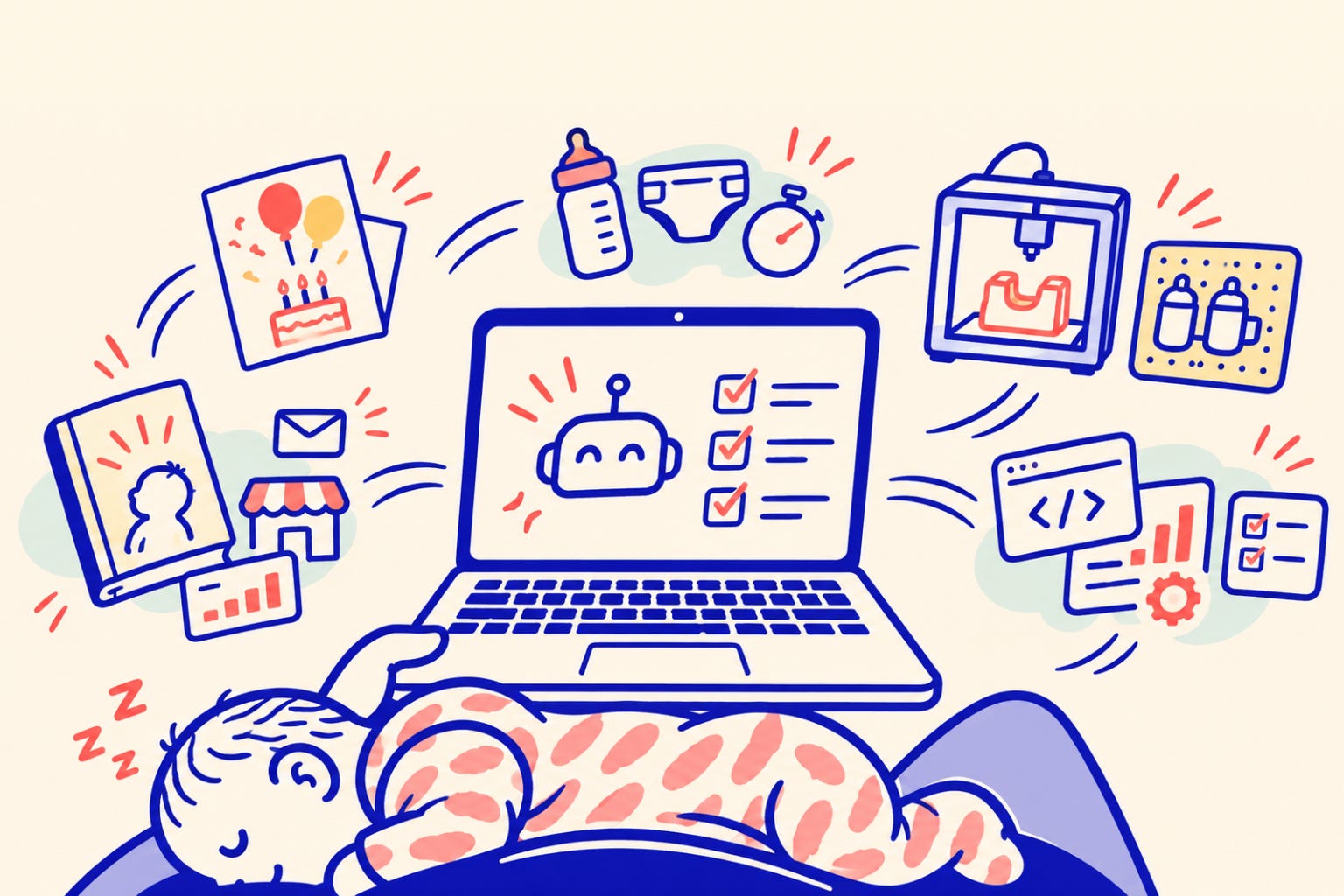
For those of you who didn’t see my note and have been wondering where I am, my second kid was born at the end of October. The lead-up and the event itself kept me rather busy.
In the meantime, as one of my colleagues described it, “All hell broke loose the moment you went on leave.” Semiconductor/tech market chaos, the US midterm elections—and, of course, everyone’s favorite leather jacket model was dismissed from his lifestyle business of 30 years for diddling a maybe (and maybe not) Chinese spy. And, of course, Anthropic’s much-anticipated IPO has gone forward.
My own day-to-day concerns are different.*
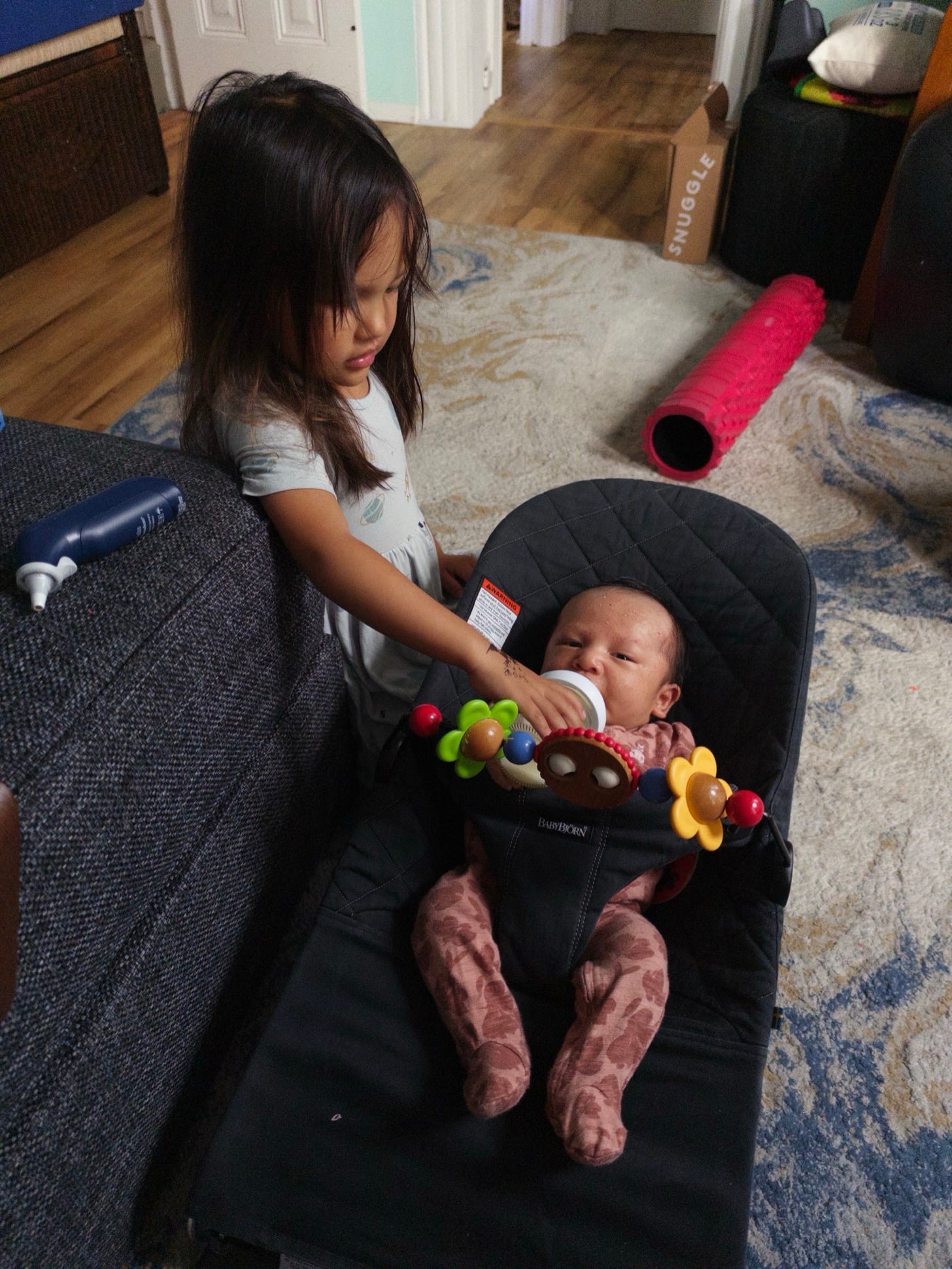
Even with all that going on, I keep seeing the question, “What does AI actually do?” Those in the throes of AI mania might find that absurd, but that community is its own bubble.
I figure let’s actually get concrete about how different having a baby in the AI age was from my first child… who was born a mere almost-four years ago. One of the most fundamental aspects of humanity is raising children, so let’s see how AI actually changes it for me, an early adopter.
Two quick things before we dive in:
Black Friday sale: I’m running a little Black Friday sale for my book What You Need to Know About AI—eBook is $5 (usually $12.99) and my signed hardcover is $24.99 (usually $29.99, buy from seller “Weighty Thoughts”) while supplies last. “Ships from and sold by Amazon.com.” would get you an unsigned hardcover.
Online book talk: On December 1st at 3pm ET, I’ll be hosting a book talk with the Wonder Tools Book Group, led by Jeremy Caplan. It’s a relaxed, online conversation, and you’re welcome whether or not you’ve finished the book. It’s open to anyone who becomes a Wonder Tools paid subscriber ($8/month). RSVP here!
Death of SaaS / Custom Tracking Software
SaaS has been declared dead prematurely, but it is true that low-stakes custom software has been trivialized by AI.
During my daughter’s early days, we used an app called Baby Connect. It honestly looked like something out of Internet 1.0 (… maybe 1.5).
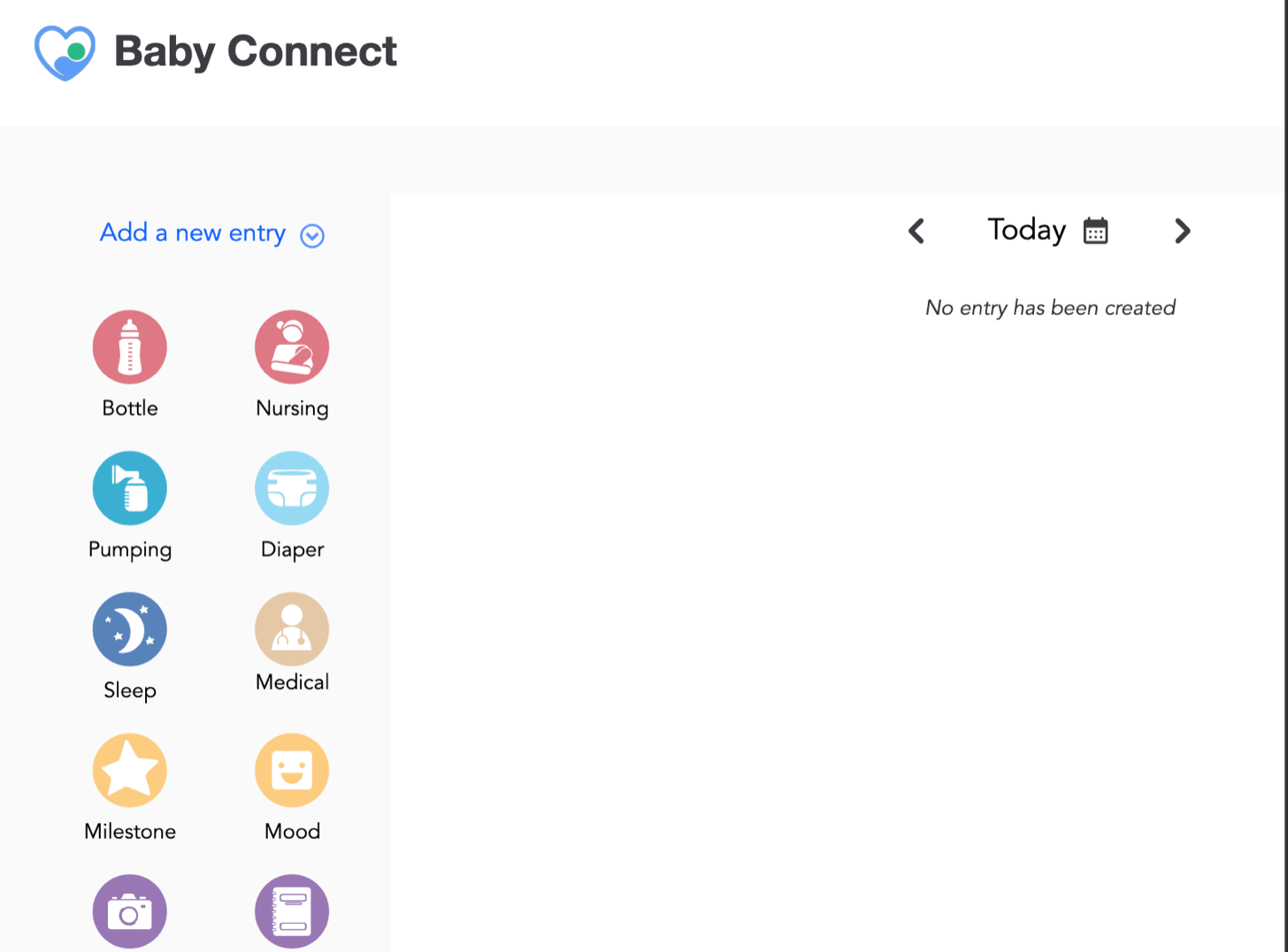
Putting aside aesthetics, our biggest issue was that nannies/doulas would not use it. Or rather, we couldn’t reasonably expect them to learn and use it, especially with my wife and me on roughly zero sleep.
Honestly, while I would encourage parents looking for this kind of thing to use Baby Connect—we were happy to use and pay for it, after all, among the innumerable apps available for this—there’s no question it’s clunky. My process for overnight caretakers (grandparents or night doula) was to have them write things down on paper or a whiteboard, then do the data entry myself the next morning (tapping and typing each line madly) while popping Tylenols washed down with coffee until I finished.
This time?
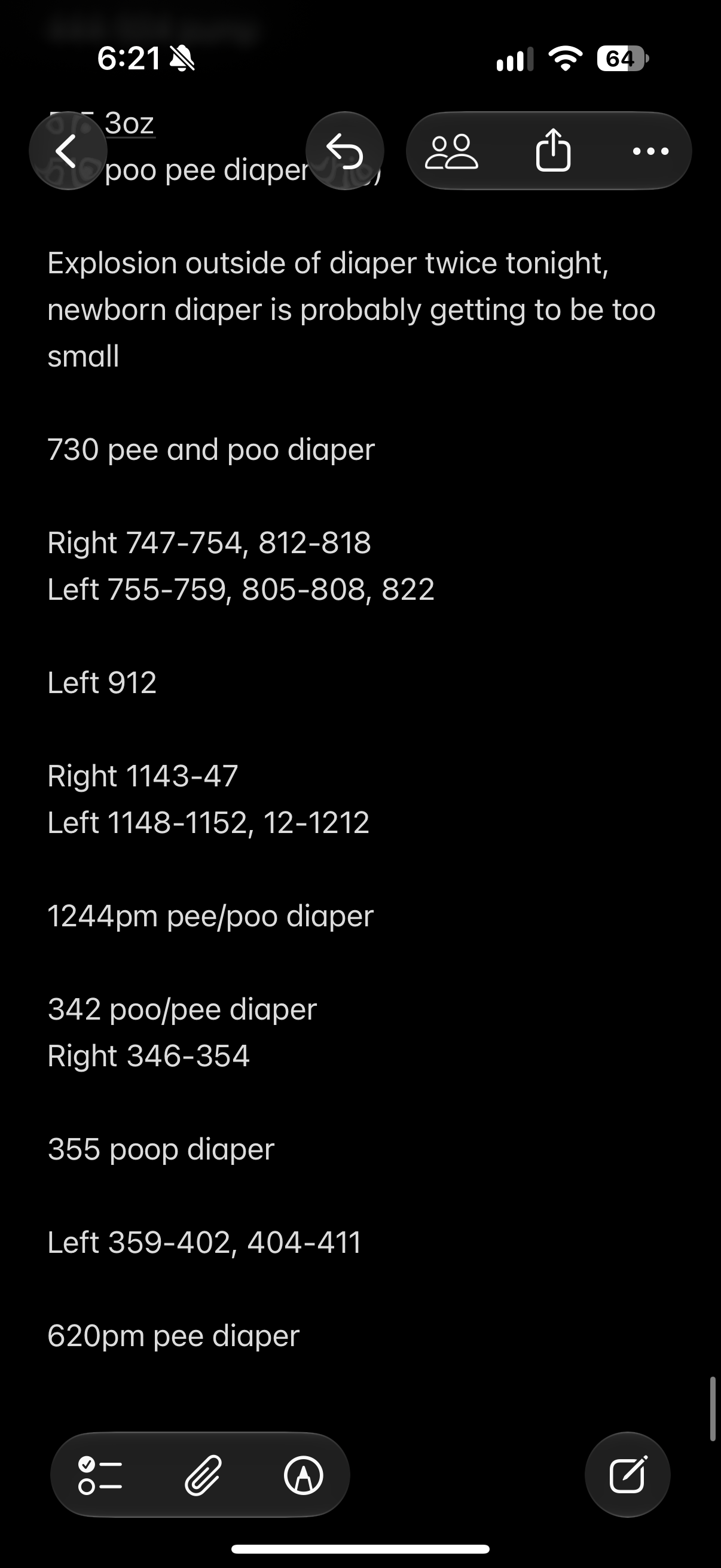
This is a shared note in Apple Notes. As it happens, all caretakers are on iOS devices, so conveniently we can share a single note that people just dump info into.
This is actually a fairly clean section. I wanted readers to get an idea of what it’s meant to capture, after all. Those who have dealt with manual data cleaning know how… creative… humans can be in how they enter things.
In truth, you really just need to know that the baby ate and pee/poo’ed recently and, at pediatrician check-ups, make sure the baby is continuing to gain weight. With absolutely no processing, this would likely be totally fine. If we needed the info, I could always scan through it or (with a naive application of AI) just cut a piece, dump it into Claude/ChatGPT/etc., and ask it questions.
That being said, it’s rather nice to be able to know how long it’s been since the newborn had a diaper change or last fed (3-4 hours is the longest a newborn should go between feeds).
Of course, it’s impossible to have clean data with such a freeform format and multiple people. Baby Connect’s painful click-click-dropdown-type forms are data validation to (largely) prevent bad entries.
That mess, however, is turned into clean data (more on how below) that can be displayed like this:
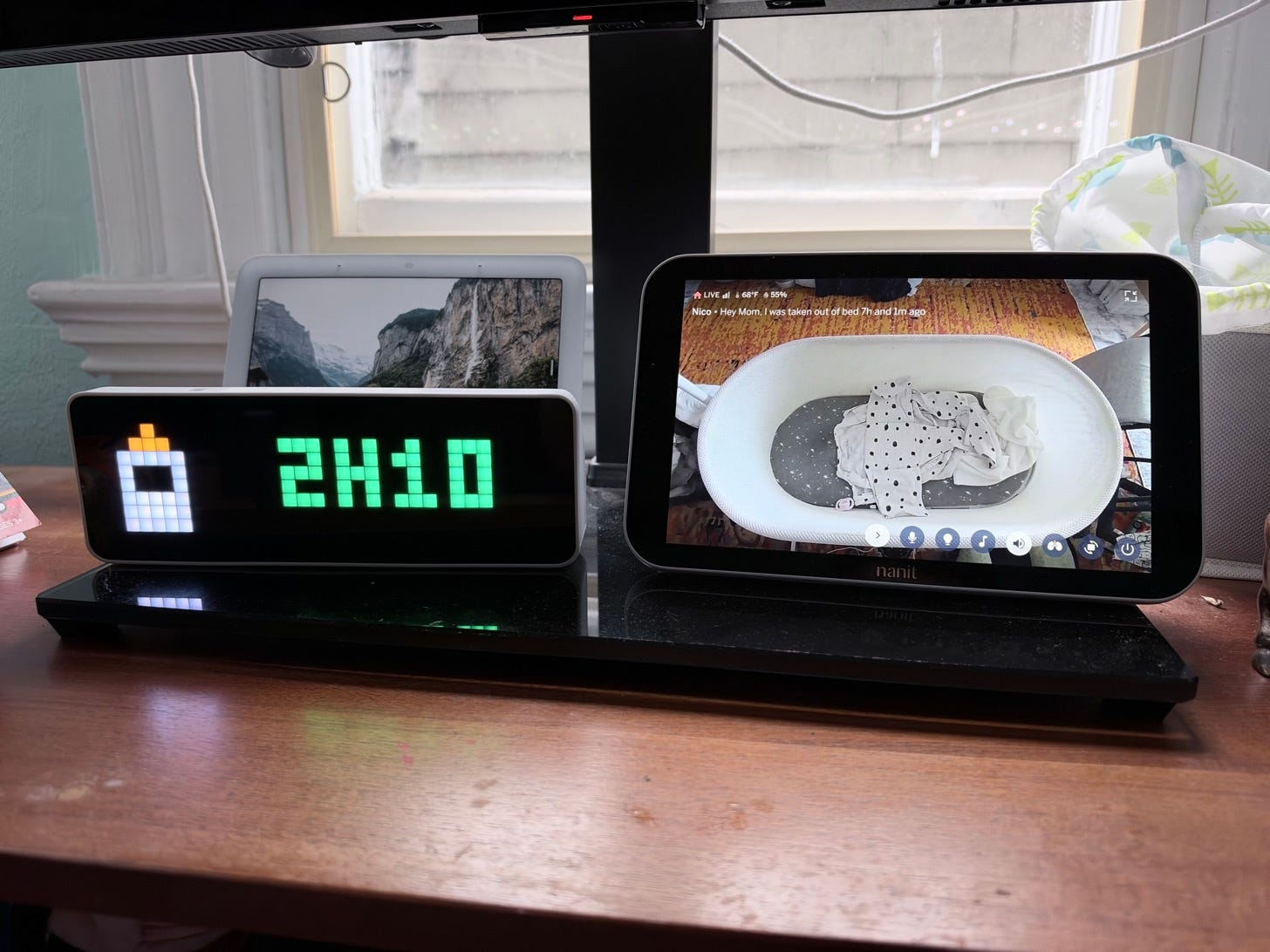
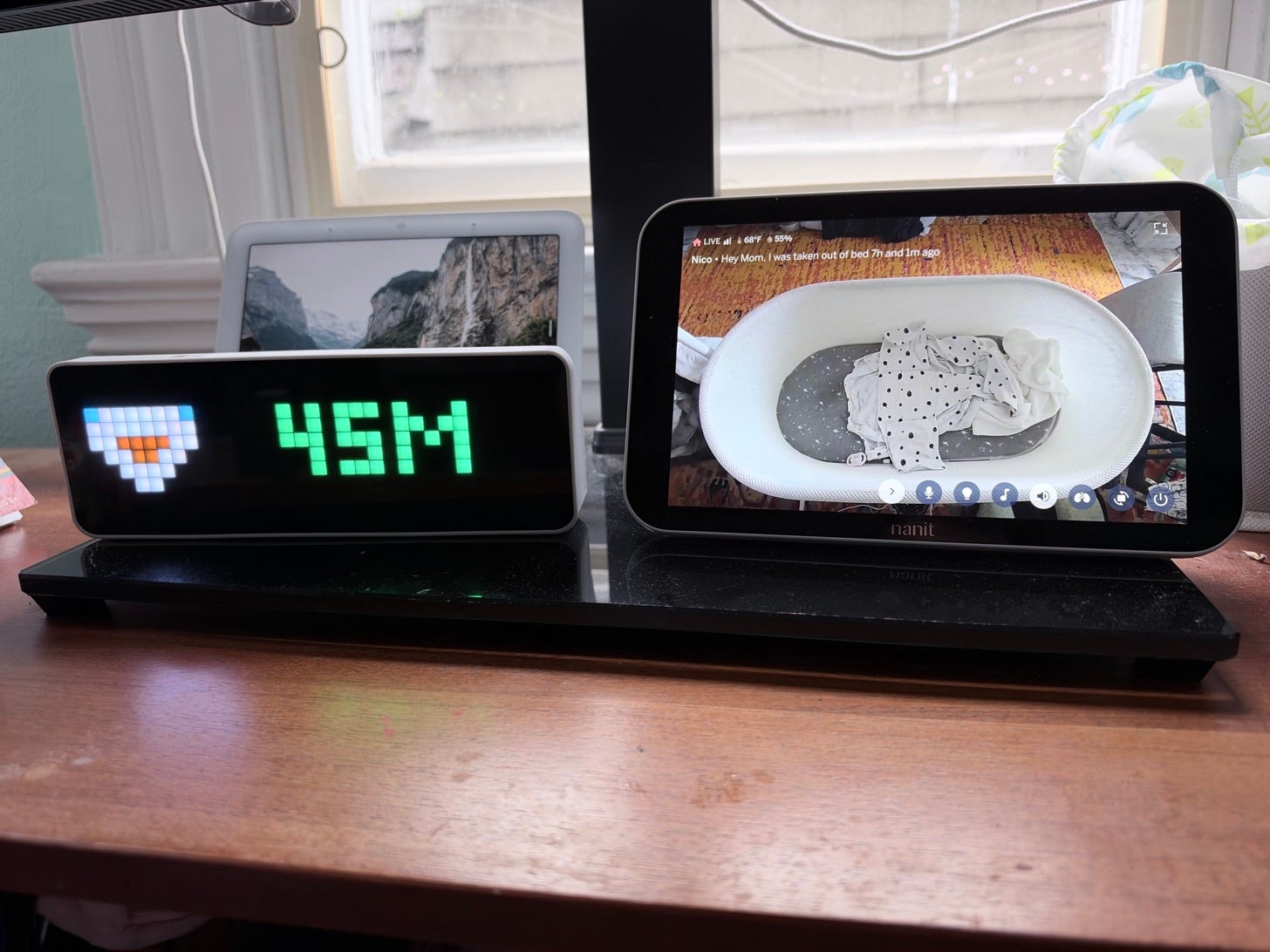
Or, while tired and glancing at my phone:
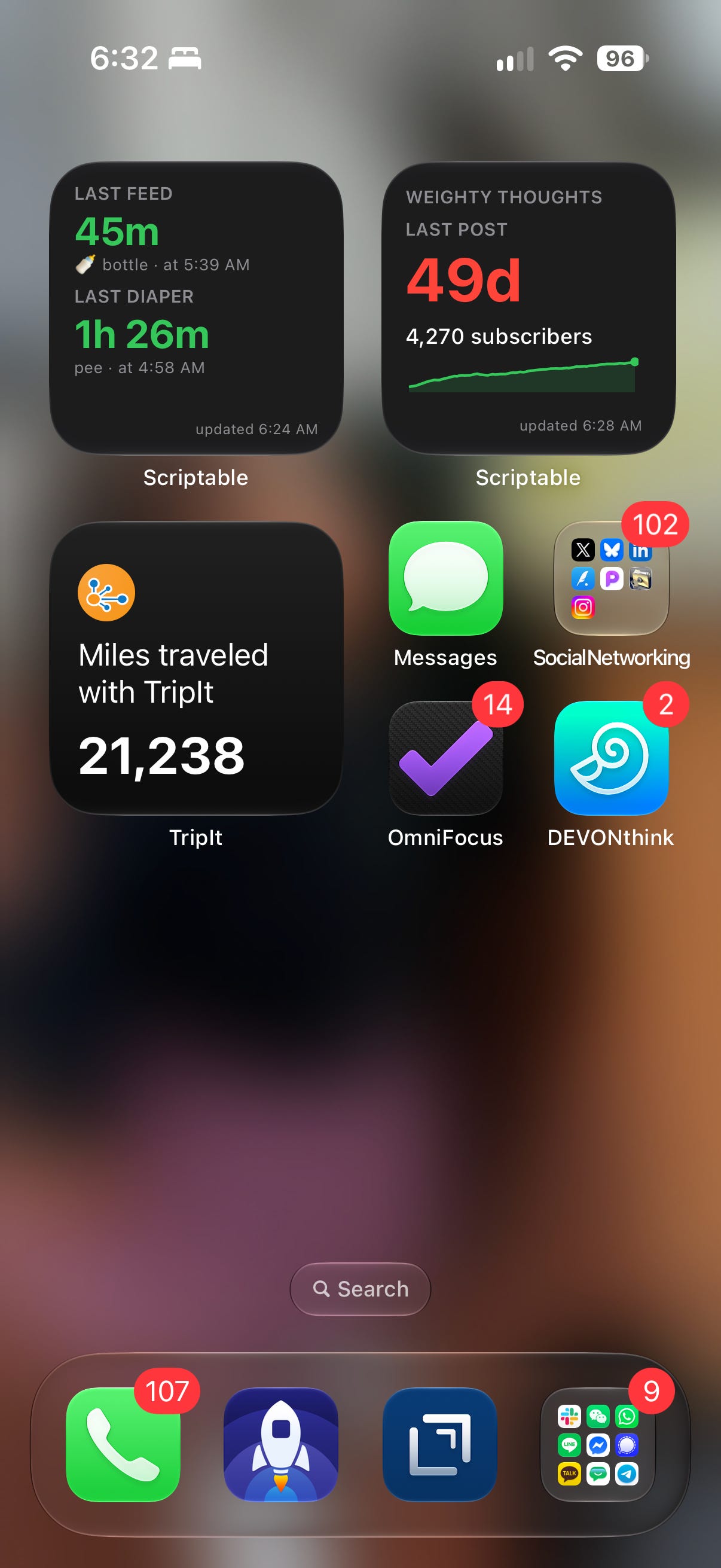
Scriptable is a useful iOS app that lets you create custom widgets backed by code that pulls info to display. This data is pulled from the same source the Ulanzi TC001 pixel clock uses.
Not Just Zero Marginal Cost Software—Also Bounded Variation
One of the biggest reasons I can do this is that AI makes writing software largely free. Note that’s writing it, not maintaining or fixing it. That distinction is why SaaS isn’t totally dead—but it does mean that for somewhat low-stakes, only-for-my-own-family software, I don’t need to cast about for something someone else already made.
I could have written the stitching software for all these pieces pre-AI. It wouldn’t have actually been that difficult. It would have, however, been time-consuming, which means I would absolutely not have done it with a new baby.
Even if I had the time, I wouldn’t have tried it, though. Again, although Baby Connect likely could have made the user interface somewhat sexier (or more modern than mid-2000s), there’s a reason it has all these buttons.
Human beings need to be constrained to keep data clean. I would have needed to build something just as extensive and at least somewhat clunky to achieve my goal (and obviously, at that point, why not use Baby Connect?).
Well… that was the case before AI. Each individual line is not processed purely algorithmically. Every single one gets an LLM call (my local machine’s Qwen 3.8 27B).
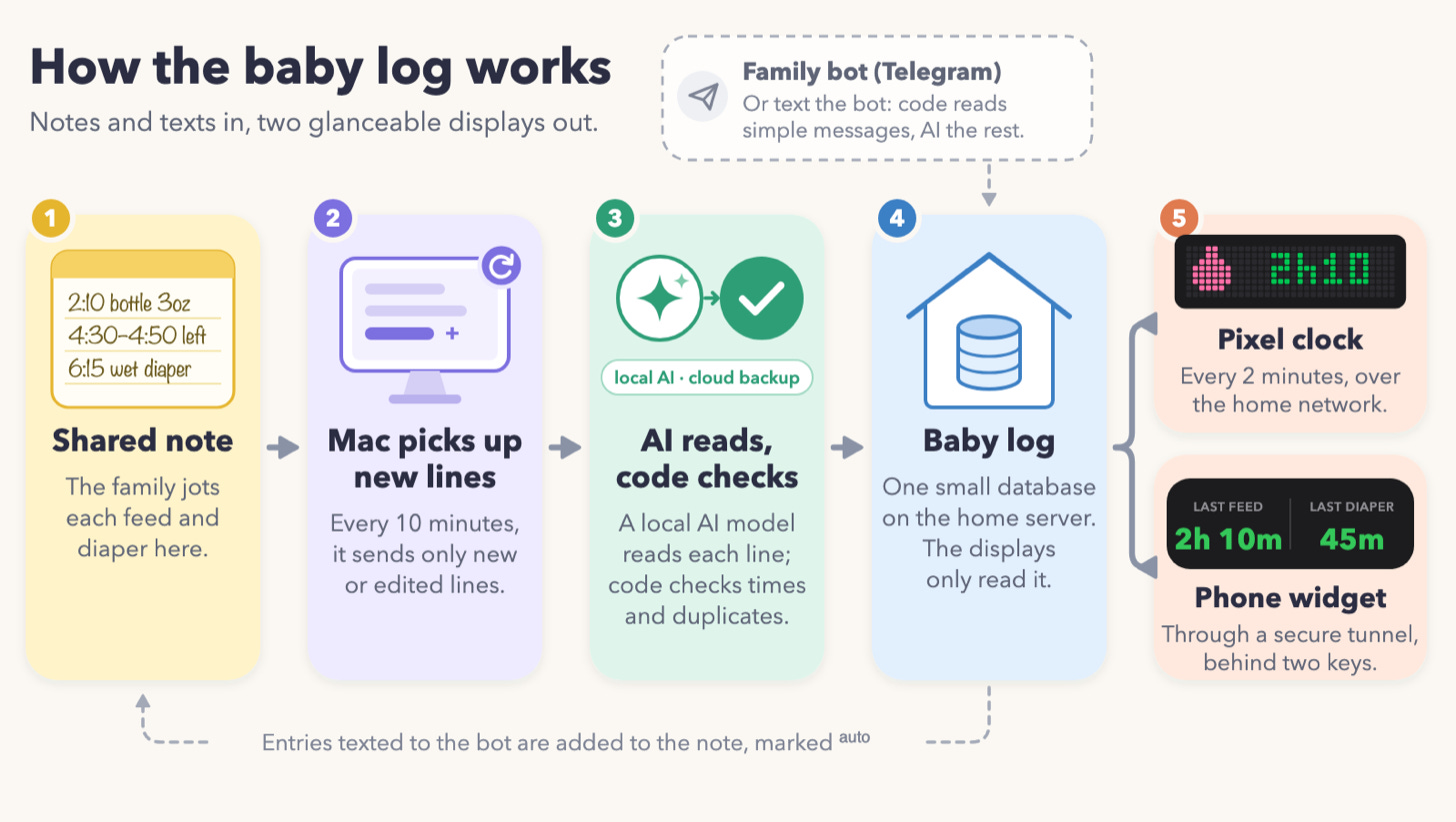
In my book, I talk about a concept called “bounded variation.” Purely mechanical or algorithmic systems cannot handle any variation outside of preprogrammed parameters. Modern AI models also cannot handle all variation (especially in what one might consider “creativity” or “executive function” or “judgment”), but they can handle some.
If something is so mangled that even a modern AI can’t figure it out, it’s not a huge deal, but almost every reasonable variation can be handled when we know it’s only one of a few different things (feeds, diapers, vital stats like weight, or notes).
Physical AI—Kind Of
Software is nice. But even if I had unlimited software done perfectly, it can only do so much with a newborn baby. What we’d need is software all the way to Rosie the Robot from The Jetsons, which means AI with robotics or other means of reaching the physical world.
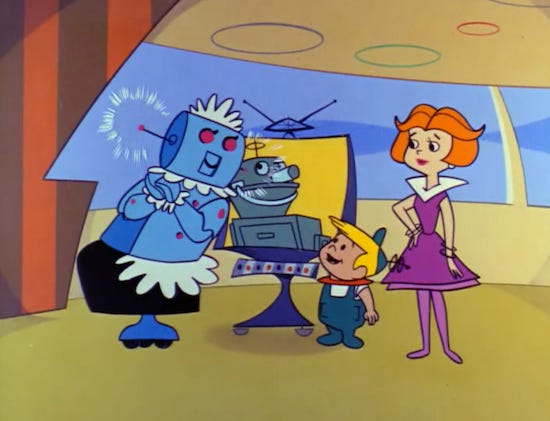
Unfortunately, that isn’t viable. While I might be willing and able to make time-activated homing sprinkler systems that visually recognize, track, and spray raccoons digging in my backyard, I’m not going to trust a 6-axis robotic arm with my newborn.
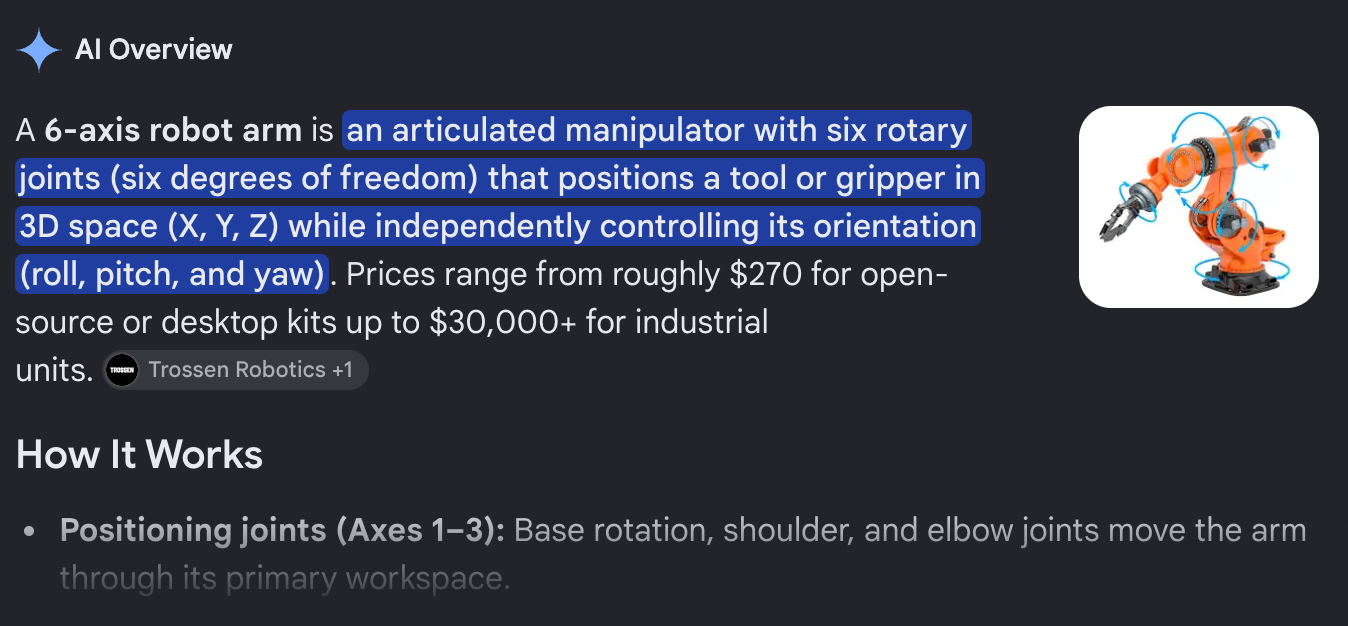
So, does that mean that AI is limited to helping us with tracking and other purely “digital” things?
No, actually. While writing software for a robotic arm would be one way to “reach into” the real world, it isn’t the only one. 3D printing is another, and one that AI has been helping me with.
Non-parents would be shocked by how many baby bottles, breast pump parts, and wash cycles of all of these things there are. I needed to rapidly and flexibly (because bottle heights will change as the baby grows) scale my ability to handle bottles. Enter frontier models building custom 3D models to print. I’ve tried both Claude and ChatGPT and they both do fine—even my local Qwen can do it in a pinch.
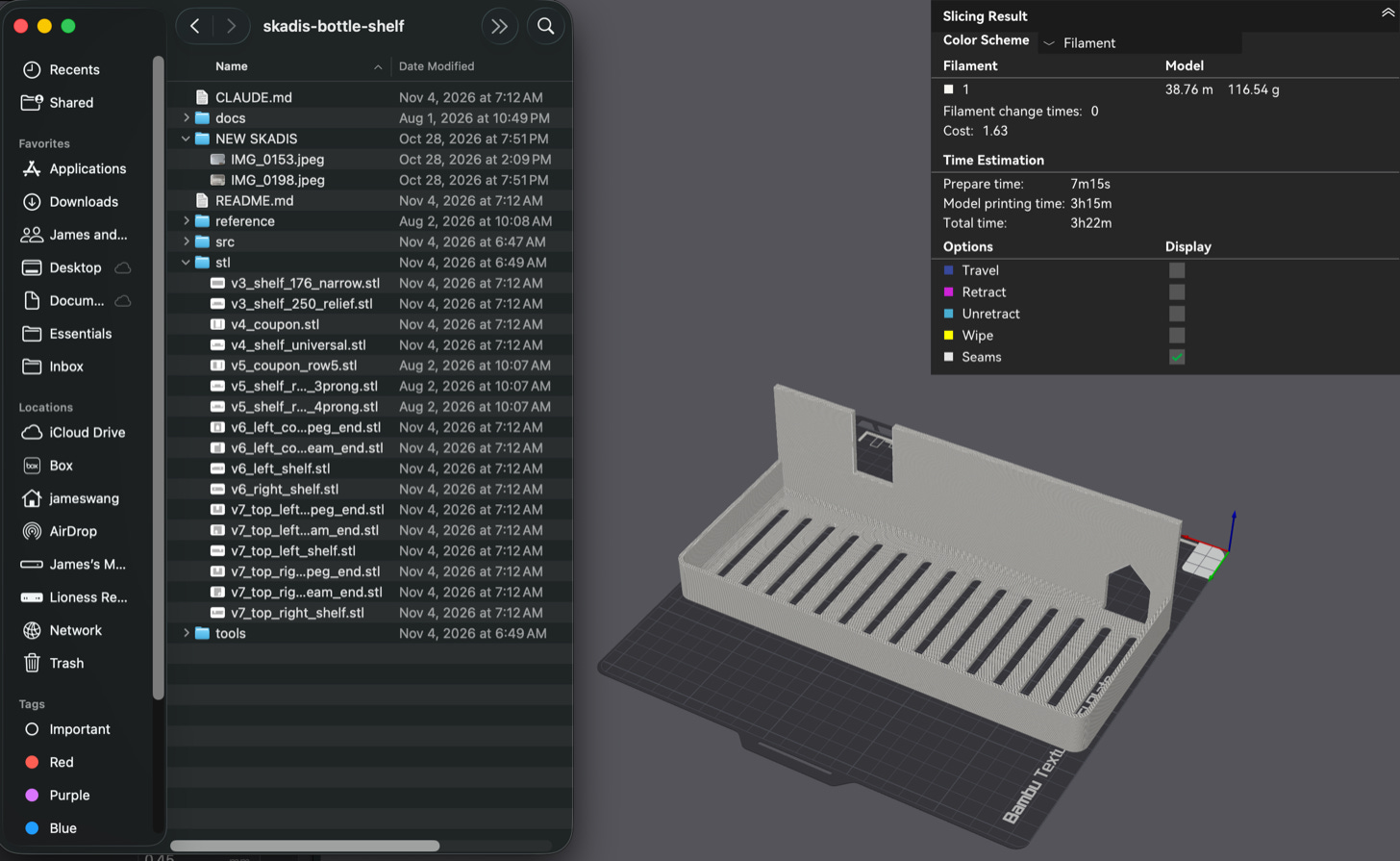
I like to use IKEA Skadis, a pegboard system that allows for a lot of useful attachments—both from IKEA and from the open (3D) model community.
However, no matter how many remixes of models there are, customization to fit odd circumstances and spaces still often has to happen. See below for my annoying circumstances with dodging attachments:
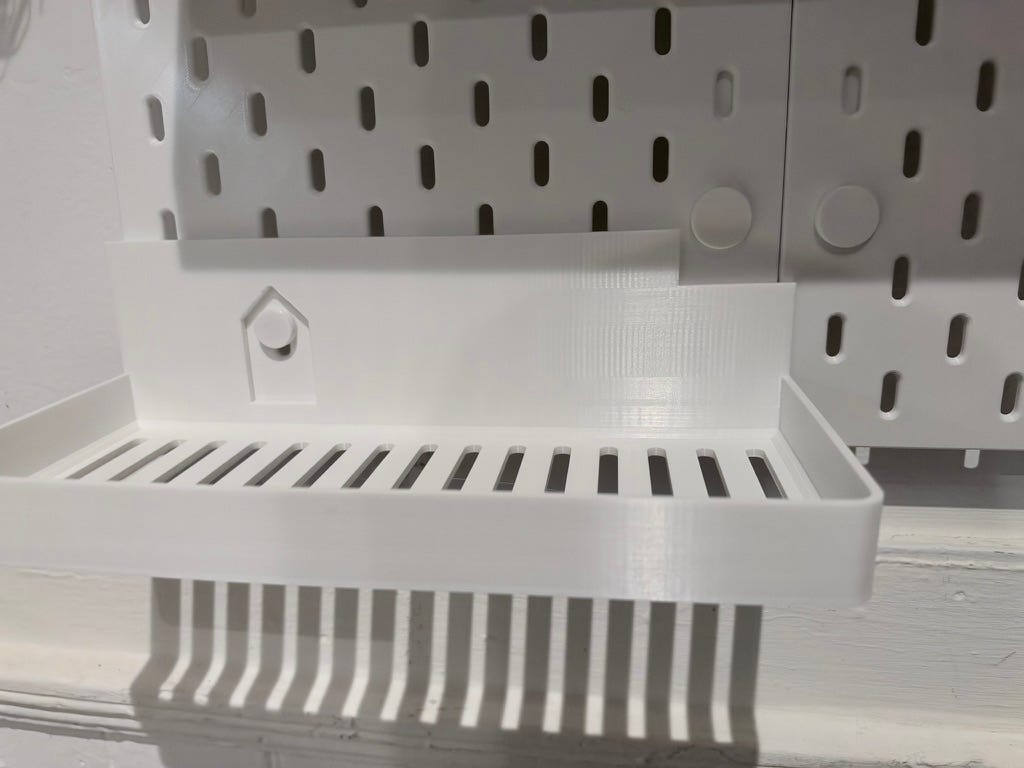
And, again, that’s where AI comes in to easily modify the models. With a pass of my adversarial review skill (other models checking the work), I can basically tiredly ask for what I need with literally an iPhone photo and have it clarified and printed out in a few hours.
While it isn’t quite a robot caretaker, it is a nice quality-of-life improvement.
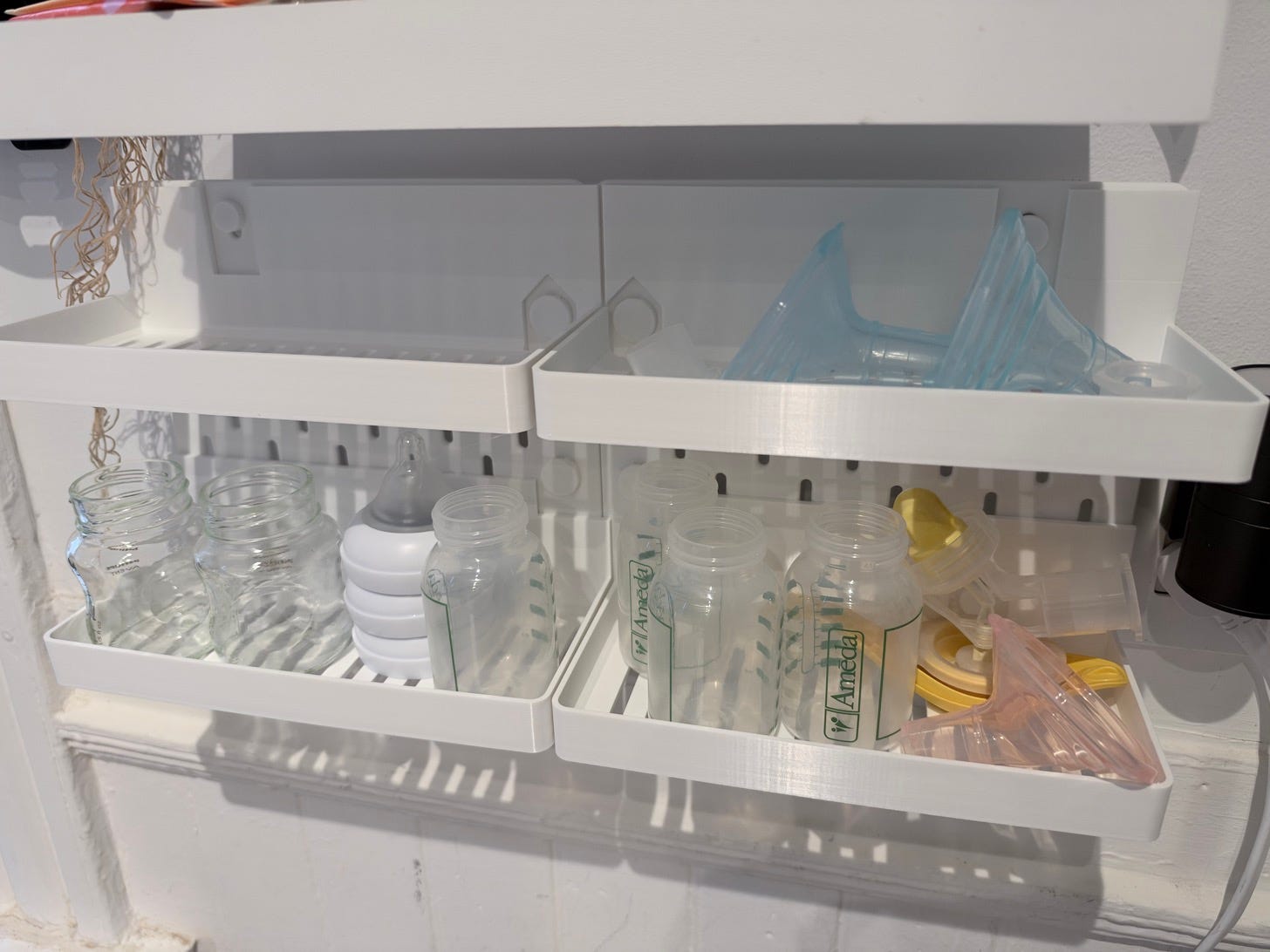
Especially since anything involving kids tends to scale out of control.
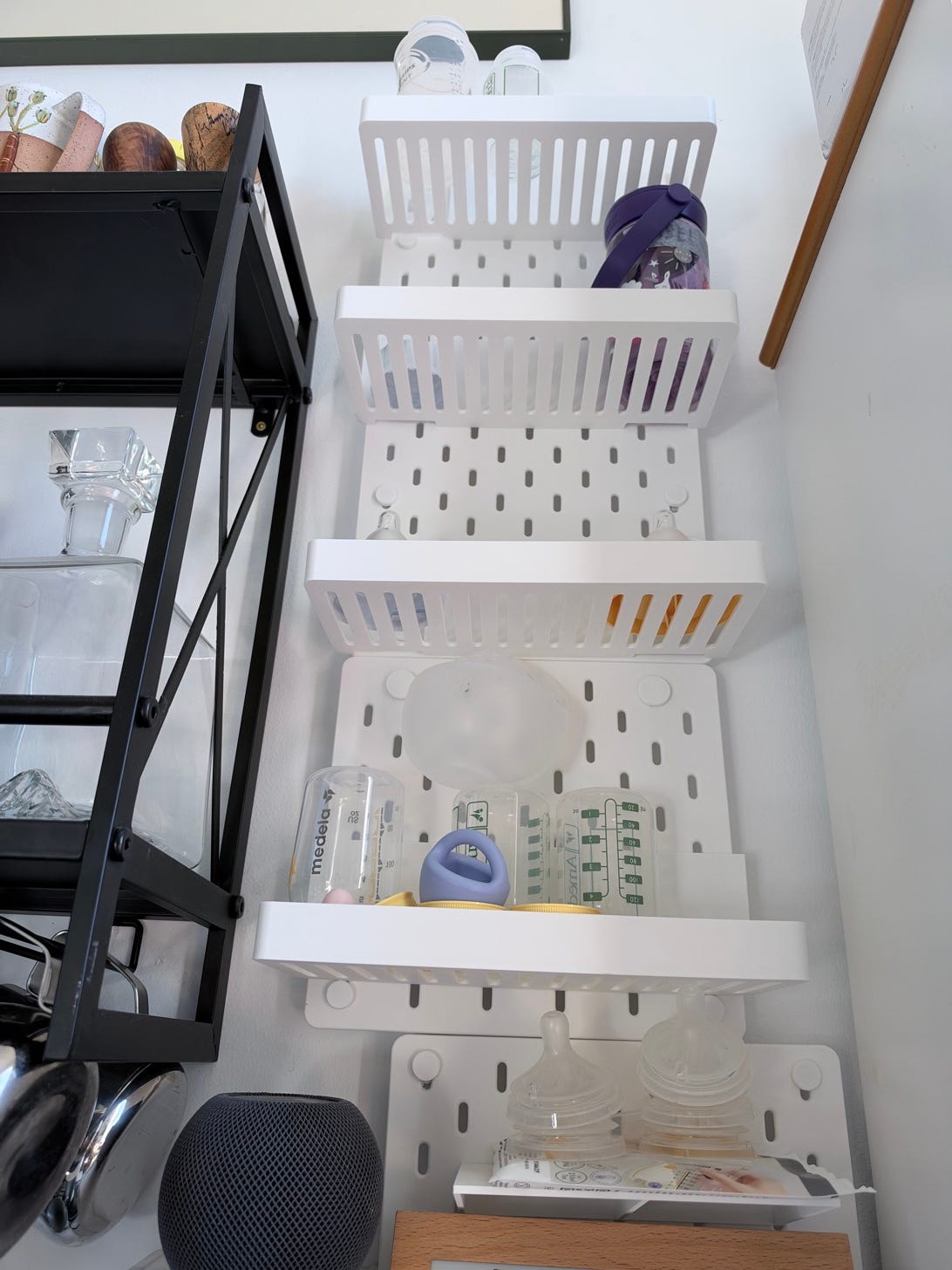
And… Everything Else
I’m not the only one who is able to leverage modern AI (or the things that attach to it), though.
While the new baby takes up a lot of time… he is our second kid. Life goes on, no matter how much you’d like it to just pause while you get just a little sleep…
As I said, the ideal help would be Rosie the Robot, who can tirelessly care for the baby. However, while that is nice for dad… if mom is breastfeeding, even Rosie can’t totally take away the burden.
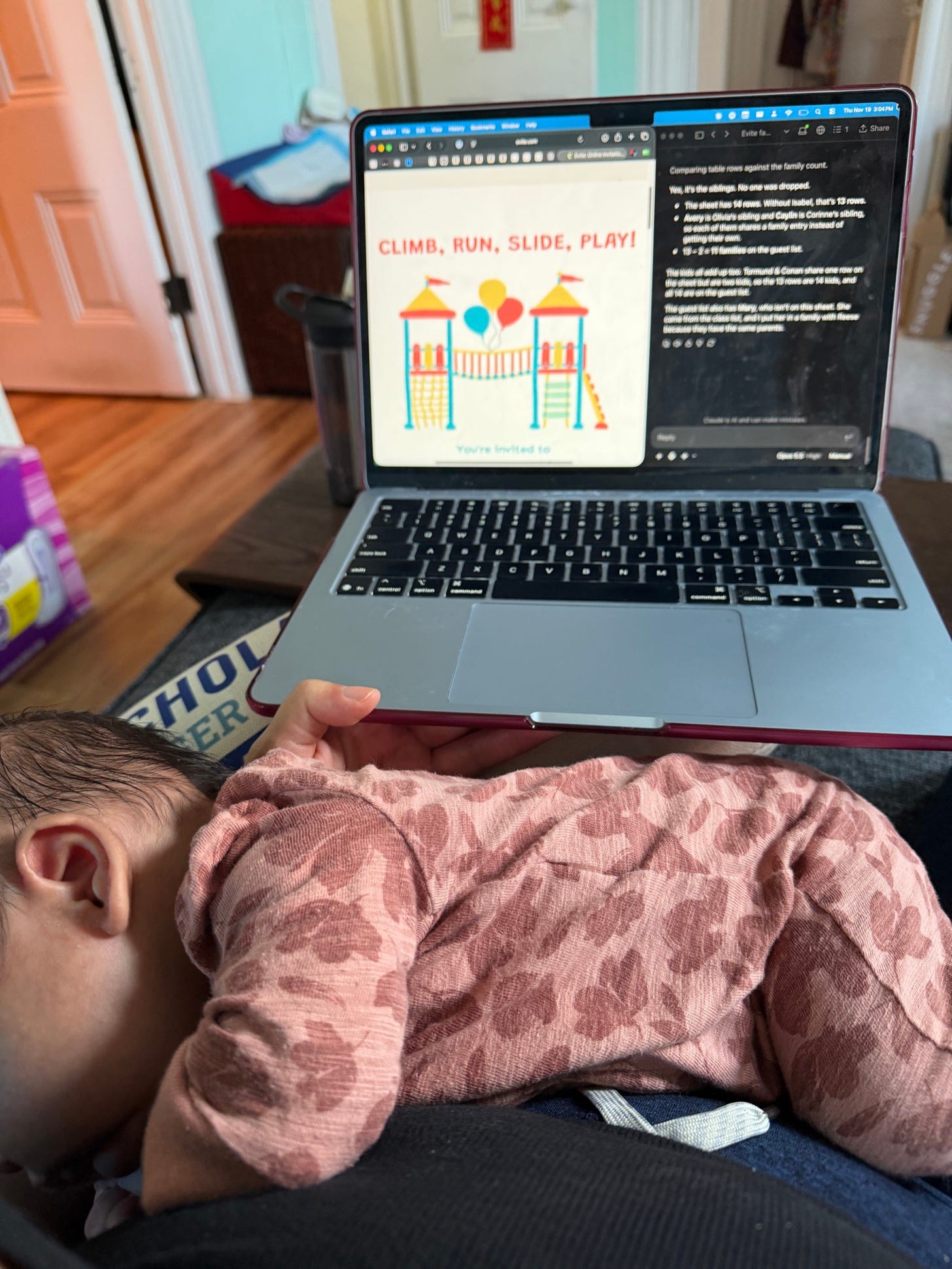
For example, our daughter’s birthday is coming up. Looking for venues, putting together invites, sending them out… All of that is a rather tall order for a mom who has one hand (max) free while breastfeeding.
Enter Claude: its ability to use Chrome, its Gmail/Contacts connectors, and voice-to-text (both Apple’s and Claude’s own).
I’d already heard from some physically disabled programmers how life-changing this all has been, but it has also made an amazing difference in my wife’s ability to stay connected to things and not be (in her words) “just a milk machine.”
This is all far more basic. In fact, it’s basic to the point where I’m not sure I should spend the word count to explain it more—it’s literally opening Claude, enabling it in Chrome, adding in connectors, and pressing voice-to-text… but perhaps that’s an even better answer to the question of “how does AI help people?”
It’s a use case that is “batteries included” in Claude. There’s no super special agent harness or crazy software glue piecing it all together. It’s literally just what came in the box.
But it’s also something that was completely unimaginable a few years ago. It is a complete change in the way life looks and feels for a new mom trapped (cutely) by a nursing newborn.
AI is Already Changing Daily Life
My constant refrain to those looking at my workflows is that while I might be further along the curve in how advanced my AI use is, this will inevitably diffuse to everyone.
I had initially expected better AI products to flood the market, making my customized agents largely redundant… which has been much slower than I would have ever expected. Meanwhile, we’ve had continued competition for model leadership. While Anthropic, OpenAI, and Google more or less unquestionably lead, we have so many alternatives that we can be pretty comfortable that it’ll be difficult for any one frontier model company to dominate and squeeze the market.
Nevertheless, AI can already substantially improve one’s everyday life. Hopefully this inspires some readers to think about how they can apply it themselves—and, for those for whom this feels out of reach, this kind of thing is what they can look forward to as better products reach down the tech sophistication curve.
Hell, if it takes too long, I’m happy to share any and all of these myself. My broad message has always been that AI’s benefits will likely be “socialized” (in economic terms, where “surplus” is captured by everyone and not just monopolies/oligopolies). I still think that—and expect, even with various political challenges, that the future is brighter with AI than without it.
*Actually, that makes me seem quite zen. And that’s totally not true. I’ve been tiredly trying to keep track of a lot of random things that have been popping up thanks to everything going on. I’m thankful for working with great people, though, who are keeping things broadly under control.
I’ve also been working on a project for the better part of the year that auto-spawns/generates agents, which has been a great help here. That’s for another post, though…
Thanks for reading!
I hope you enjoyed this article. If you’d like to learn more about AI’s past, present, and future in an easy-to-understand way, I’ve published a book titled What You Need to Know About AI, which is on sale during Black Friday!
On Amazon now through December 1st, it’s $5 for the eBook (usually $12.99) and $24.99 for a signed hardcover with a gold-leaf bookmark—buy from Amazon seller “Weighty Thoughts” for the signed copy—those are from me. “Ships from and sold by Amazon.com.” would get you an unsigned hardcover.

You can order the book on Amazon, Barnes & Noble, Bookshop, or pick up a copy in-person at a local bookstore.

Color me a skeptic, but I know for a fact my mother (who raised 6 kids) never recorded a thing. And I'd bet a nickel none of her peers did either, nor any of her ancestors.
Congratulations! When I had six kids, the answers came from parents and other elders. It's too bad they are no longer needed. It will be interesting to see the decisions you make as they grow up with AI. Please keep sharing.